
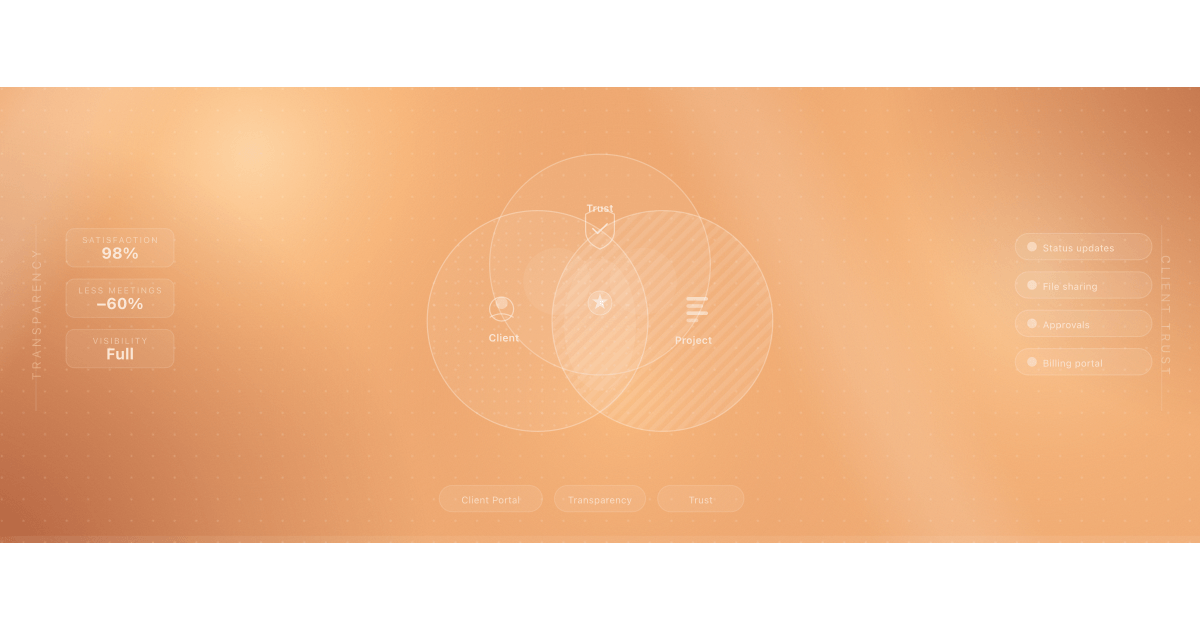
Build Client Trust: Project Transparency Without Meetings
Transparency is a fundamental element that any client seeks, especially in the agency and service sector, where clients often need to be kept informed of the latest updates. To improve your operations, you can optimize your revenue workflow or standardize your agency workflow.
Conversely, many teams resort to constant meetings to share project updates with clients, which wastes valuable time, negatively impacts employee productivity, and creates a tense work environment. In addition, to boost efficiency, you may want to compare different pricing models or discover how to get paid fast.
This post will offer flexible solutions for agency and company owners, helping them enhance client transparency without the need for emergency meetings and without wasting more time.
Signs Your Agency Lacks Client Transparency
Are you about to lose your client base due to a lack of transparency? Here are the most prominent warning signs to watch out for:
- ✗ Frequent meetings, which negatively affect your employees' productivity and the work environment.
- ✗ Customers are constantly asking about the latest updates.
- ✗ Your clients are always worried and feel they are not being kept informed about the latest updates.
- ✗ Frequent requests for simple updates.
All these signs serve as a warning to agency owners. Therefore, building client trust is like reviving your business.
Why Clients Lose Trust During Projects
It's worth noting that many factors contribute to weakened client transparency, most notably:
- Lack of clarity: Clients feel they are not kept up-to-date with work progress, leading to a gradual erosion of trust.
- Poor client communications: This results in a buildup of updates and communication pressure, creating conflicts.
- Excessive reliance on meetings: Wastes a lot of time, increases the workload on employees, and creates significant operational stress.
What True Project Transparency Looks Like
Relying on a Client Portal for Agencies that serves clients, keeps them informed of work updates, and enhances their communication with employees is what builds client trust. Therefore, many agencies are moving towards:
- ✓ Displaying work updates clearly to clients, keeping them informed without the need for meetings.
- ✓ A single source of information simplifies the experience for both the client and the employee.
- ✓ Knowing each employee's role at every stage of the project.
What Clients Actually Want to See (Not Just Reports)
The client isn't concerned with excessive detail or lengthy reports as much as they are with clarity and control over the overall project picture. Simply put, they want to understand quickly:
1 Where is the project now?
Are we at the beginning, halfway through, or nearing delivery?
2 What has already been accomplished?
They want to see tangible results, not vague promises or unverified tasks.
3 What is currently being worked on?
What is happening "right now" within the project, not just what will happen later.
4 Are there any problems or delays?
The client values transparency more than hiding obstacles; it's important that bottlenecks are clear and understandable.
5 What's next?
They simply want to know: "What happens next?" and when to expect the next deliverable.
How Client Reporting Builds Trust Automatically
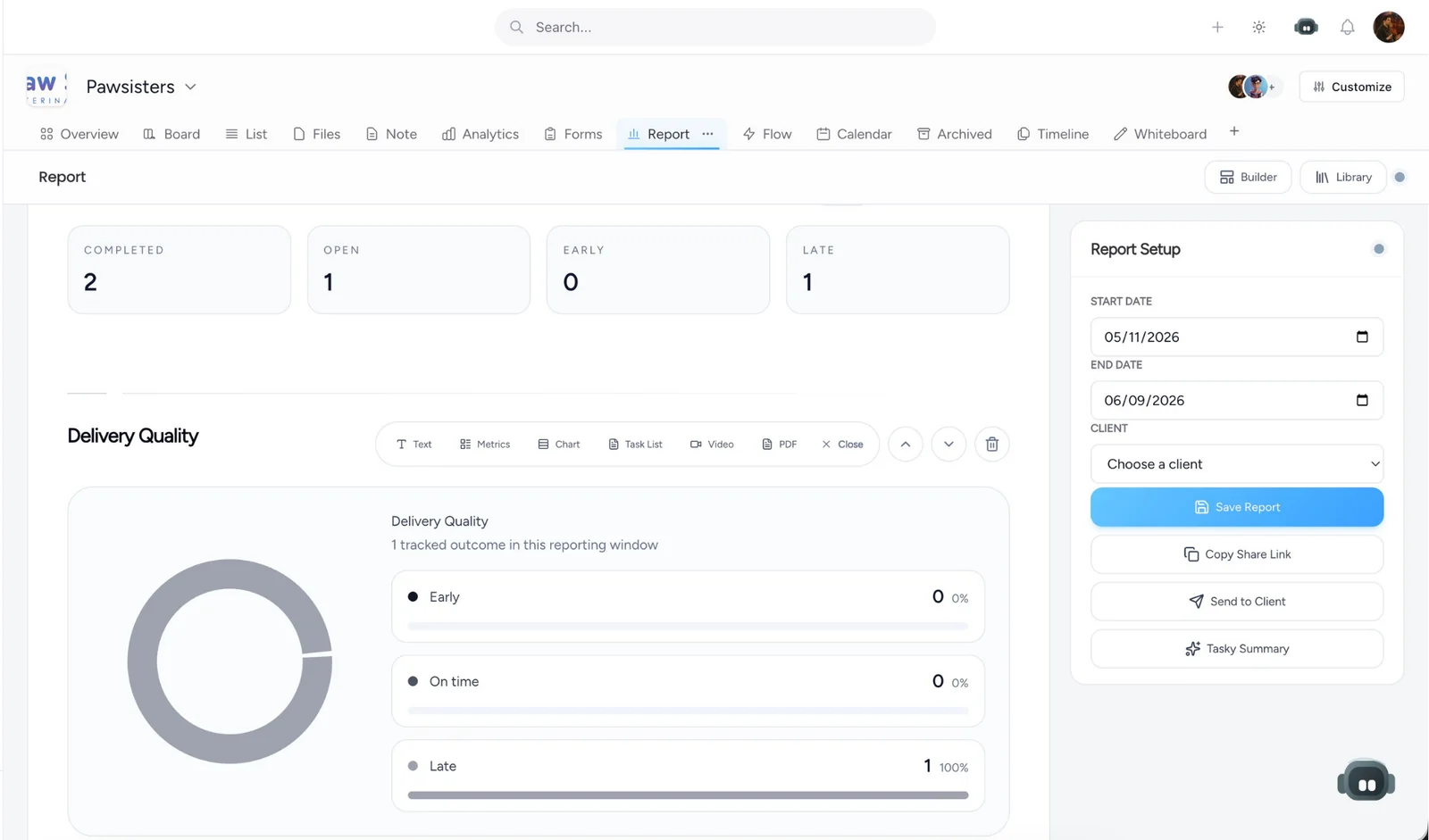
Good client reporting boosts client trust, reduces employee workload, and minimizes time wasted in emergency meetings. Automated Reporting for Small Teams facilitates easier client communication, allowing clients to view work updates and track project progress in real time on a unified dashboard.
Furthermore, adding project modifications becomes simpler, leading to smoother collaboration between clients and employees within a unified framework. No more wasted time in emergency meetings; the work environment becomes less stressful, helping employees or freelancers complete their work in a supportive and motivating environment, thus boosting their productivity.
The Role of Client Portals in Transparency
Currently, client portals have become indispensable tools for project management, especially for agencies or medium-sized companies, because they:
- ✓ Provide clients with a clear view of work updates.
- ✓ Enhance effective communication between employees and clients without wasting valuable time.
- ✓ Offer comprehensive project management capabilities.
- ✓ Daily client inquiries about work updates decrease.
How to Implement Transparent Project Delivery in Your Agency
Client transparency means clear visibility, so you can implement this within your agency by following these steps:
Develop a Work Plan
Start by breaking down the project into steps that are understandable to employees, according to each employee's defined role. This facilitates smoother workflow between teams and makes it easier for clients to follow up.
Use Automated Reports
Human intervention can increase the number of errors, so relying on automated reports reduces these errors.
Provide Direct Access
Clients always seek clarity, so providing direct access to the project dashboard improves the client experience and reduces repetitive questions about work updates.
Conclusion
Client transparency is a valuable asset that can be built by providing clear insights and keeping the client constantly updated on all work progress. Therefore, client reporting, enhanced client communication and a unified framework that consolidates all steps in one place all contribute to building customer trust in your agencies. To get started, you can explore our Taskeya solutions or track our product roadmap to see how we help teams unify their operations.
Frequently Asked Questions
What is client transparency in project management?
It's a project management approach that relies on providing the client with a clear and continuous view of the project's progress at every stage. This allows them to track what's being done, what's in progress, and what remains to be done at any time, without needing to request frequent updates or rely solely on meetings.
Why is client transparency important for agencies?
Because it reduces the understanding gap between the team and the client, prevents miscalculations, and helps build long-term trust. When the client sees the project's progress clearly, anxiety decreases and satisfaction increases, which directly impacts client retention.
How do you improve client communication without more meetings?
This can be achieved through structured systems such as:
- Automatic periodic updates
- Project dashboards
- Customer portals
What is the difference between client reporting and client transparency?
Client reporting involves sending periodic reports at specific times (weekly or monthly). Client transparency, on the other hand, is a broader concept that includes providing continuous and immediate visibility into the project's progress, so the client doesn't need to wait for a report or meeting to find out what's happening.
Do client portals reduce meetings?
Yes, significantly. Client portals provide a central location containing all project updates, allowing clients to track progress at any time without needing to request meetings just to check the current status.
Ready to Unify Your Agency Stack?
Start consolidating your projects, CRM pipeline, invoicing, and client-facing portals under a single, high-performance agency operating system today.
Read Next
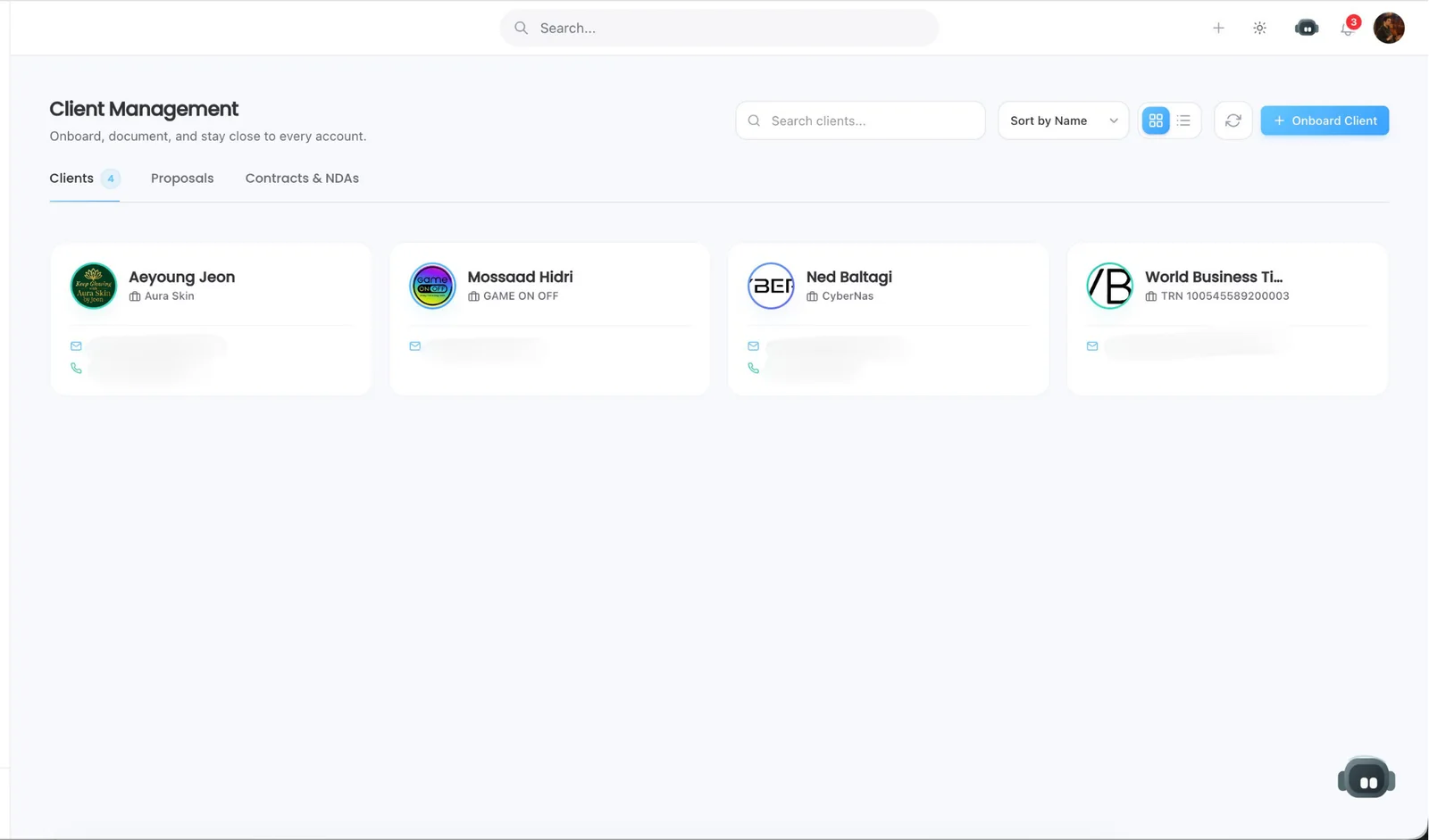
Why Every Agency Needs a Client Portal to Reduce Update Meetings
See how a client portal for agencies reduces status meetings, improves transparency, speeds approvals, and helps manage clients in one place.
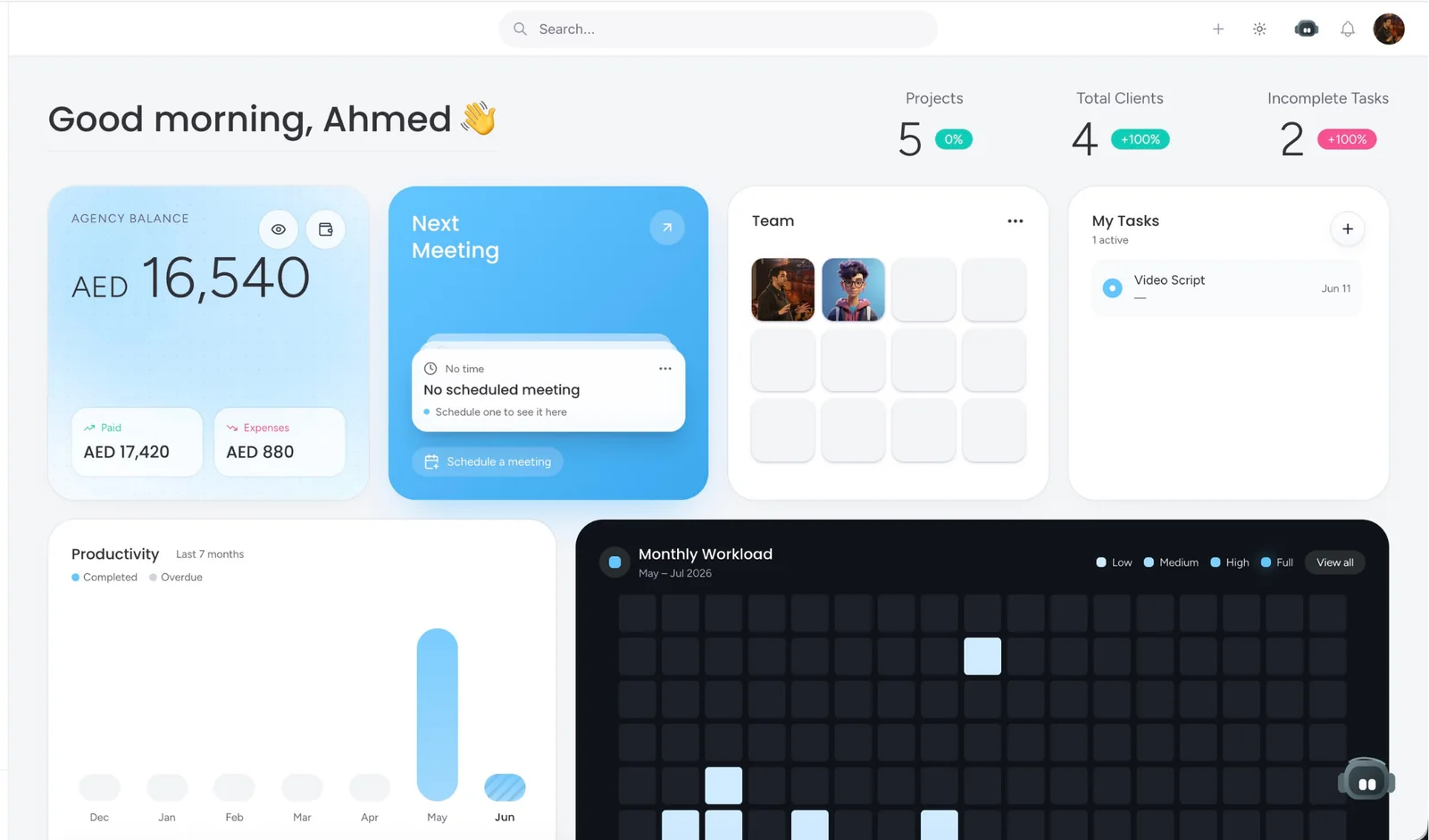
Stop Paying for 6 Different Apps: The All-in-One Agency Management Software Guide
Discover how all-in-one agency management software helps agencies replace multiple SaaS tools, reduce costs, and eliminate workflow chaos.